


GPS and RTC Plugin Module for Raspi
DragonTIME is a Raspberry Pi GPS time server module with PPS output for microsecond accuracy. Battery-backed RTC holds time during outages. Plugs directly into GPIO header.
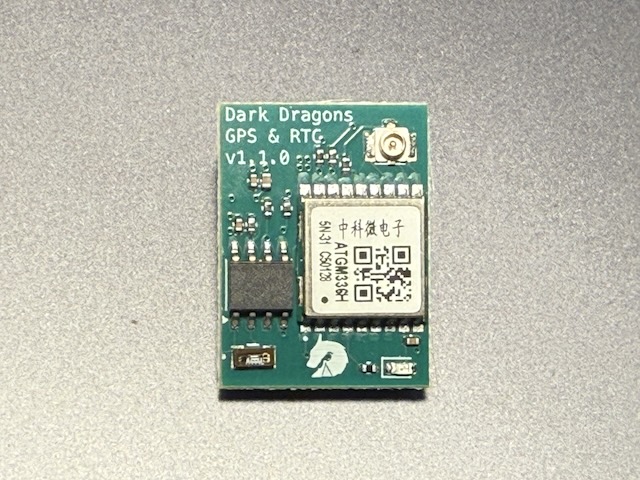
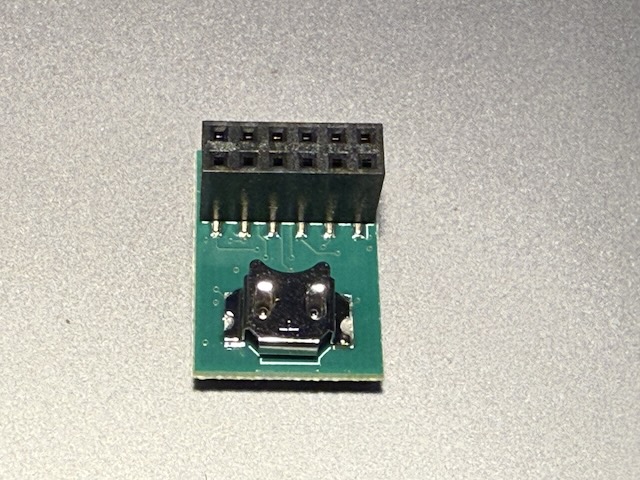
Microsecond-Accurate Time. No Internet Required.
The DragonTIME GPS Module turns your Raspberry Pi into a stratum-1 time server-the highest tier of network time accuracy-using GPS satellites instead of internet NTP servers. For remote observatories without reliable internet, that means accurate timestamps on every imaging frame. For Pi tinkerers, it means your entire home network syncs to atomic clock accuracy. Either way, you get time you can trust.
Why This Module?
We built the DragonTIME because most GPS modules for Raspberry Pi are frustrating to set up. Pin headers that don't match the Pi layout. Jumper wires everywhere. Soldering required. We wanted something simpler.
The DragonTIME plugs directly into your Pi's GPIO header starting at pin 1-no jumpers, no soldering, no adapter boards. It's about the size of a postage stamp, so it doesn't add bulk to your setup. And unlike bare GPS modules, it includes a real-time clock with battery backup, so your Pi keeps accurate time even during brief power outages or GPS signal loss.
This is a new addition to the Dark Dragons Astronomy product line, but the underlying technology is proven. The ATGM336H GPS receiver and Texas Instruments BQ32000DR RTC are widely used, well-documented chips. We've combined them into a plug-and-play package that just works with standard Linux tools. Early installations are seeing microsecond-level accuracy with chrony-exactly what you'd expect from a properly configured GPS time source.
For observatory owners running DragonLAIR controllers, accurate local time means your automation schedules, imaging timestamps, and log files all stay perfectly synchronized-even at remote sites where internet connectivity is spotty or nonexistent. For the broader Pi community, it's a satisfying weekend project that gives your network infrastructure a genuine upgrade.
Key Benefits
True Stratum-1 Time Without Internet
GPS satellites carry atomic clocks, and the DragonTIME's PPS (pulse-per-second) output lets your Pi synchronize directly to that signal. Configure chrony to discipline your system clock, and you're running a stratum-1 time server-the same tier as the national laboratories that define official time. Your NAS, your imaging computer, your home automation system-they can all sync to your Pi and get better time than most internet NTP servers provide.
Plug and Play-No Soldering, No Jumpers
The DragonTIME ships with the header pre-soldered and aligned to the Raspberry Pi GPIO layout. Plug it in starting at pin 1, connect your GPS antenna, configure chrony, and you're done. No breadboards, no flying wires, no hoping you got the pinout right. It's the kind of simplicity that should be standard but rarely is.
Battery-Backed RTC Keeps Time Through Outages
The onboard Texas Instruments BQ32000DR real-time clock includes battery backup. When power goes out or GPS signal is temporarily lost, the RTC maintains accurate time. When GPS returns, the system resyncs automatically. This is especially important for remote observatories where power interruptions happen and you need the system to recover gracefully without manual intervention.
Six-Constellation GPS for Faster Lock and Better Coverage
The ATGM336H receiver tracks 32 satellite channels across six navigation systems: GPS, GLONASS, BeiDou, Galileo, QZSS, and SBAS. More satellites means faster time-to-first-fix and more reliable signal in challenging environments. Cold start is typically 32 seconds with a clear sky view.
Less Jitter Than Internet NTP-Even If You Have Internet
Internet NTP servers are subject to network latency, congestion, and variable routing. The jitter adds up. A local GPS time source eliminates all of that. Even if your observatory has solid internet, a DragonTIME provides cleaner, more stable time synchronization. Your imaging timestamps become more reliable, and your automation schedules execute more precisely.
Tiny Footprint
The DragonTIME is roughly the size of a postage stamp. It won't crowd your Pi enclosure or interfere with cable routing. For space-constrained observatory computers, that matters.
What's Included
- DragonTIME GPS Module with pre-soldered header (ready to plug in)
- Onboard RTC with battery backup
- u.FL connector for external GPS antenna
- Electronic documentation for chrony setup
Technical Specifications
GPS Receiver (ATGM336H)
| Specification | Value |
|---|---|
| Tracking Channels | 32 |
| Supported Systems | GPS, GLONASS, BeiDou, Galileo, QZSS, SBAS |
| Position Accuracy | 2.5m CEP50 (open sky) |
| Cold Start Time | 32 seconds (typical) |
| Tracking Sensitivity | -162 dBm |
| Acquisition Sensitivity | -148 dBm |
| Update Rate | 1-10 Hz (configurable) |
| Output Protocol | NMEA0183 |
| Default Baud Rate | 9600 |
| PPS Output | Yes (for precision timing) |
Real-Time Clock (BQ32000DR)
| Specification | Value |
|---|---|
| Manufacturer | Texas Instruments |
| Calibration Range | -63 to +126 ppm (programmable) |
| Backup Power | Battery (maintains time during power loss) |
| Interface | I2C |
| Features | Automatic backup switchover, leap year compensation |
| Operating Temperature | -40°C to +85°C (-40°F to +185°F) |
Module
| Specification | Value |
|---|---|
| Voltage | 3.3V (powered from Raspberry Pi) |
| Current Draw | <25mA typical |
| Antenna Connector | u.FL (external antenna required) |
| GPIO Connection | Starts at pin 1 (blocks other GPIO access) |
| Raspberry Pi Compatibility | Pi 3 and later (Pi 4/5 recommended for best accuracy) |
Integration/Compatibility
Raspberry Pi Models:
The DragonTIME works with Raspberry Pi 3 and later. We recommend Pi 4 or Pi 5 for best timing accuracy-the faster processors reduce jitter in the clock discipline loop. Pi 3 works fine for most applications but may show slightly higher variance.
Operating Systems:
- Raspberry Pi OS (tested, recommended)
- Ubuntu
- Raspbian
- Any Linux distribution with standard serial and PPS kernel support
Time Synchronization:
We recommend and document chrony for NTP configuration. Chrony is modern, efficient, and handles GPS PPS sources well. The module works with standard Linux kernel drivers-no proprietary software or custom kernels required.
Note on GPIO Access:
The DragonTIME connects starting at GPIO pin 1 and blocks access to other pins. Plan your GPIO usage accordingly-this module is best suited for dedicated time server builds rather than projects requiring multiple HATs or extensive GPIO access.
Installation/Setup Reality Check
Installation has two parts: the easy part and the part that takes a little patience.
Physical Installation: 30 Seconds
Power off your Pi. Align the DragonTIME with GPIO pin 1 and press it into place. Connect your GPS antenna to the u.FL connector. That's it. No tools, no soldering, no jumper wires.
Chrony Configuration: 30-60 Minutes
The software setup involves editing chrony configuration files to recognize the GPS and PPS sources, then verifying that time synchronization is working correctly. We provide step-by-step documentation that walks you through the process.
Skill Level: You should be comfortable with basic Linux command-line operations-things like SSH, editing text files with nano or vim, and restarting services. The instructions are detailed and step-by-step, but this isn't a GUI-based setup. If you've configured a Raspberry Pi before, you can handle this.
Antenna Placement: Your GPS antenna needs a clear view of the sky to receive satellite signals. Outdoor mounting or placement near a window with good sky visibility is recommended. Indoor placement away from windows will result in poor signal or no GPS lock.
No Bluetooth Conflicts: Unlike some GPS modules that require disabling Bluetooth to free up the hardware UART, the DragonTIME works without any Bluetooth configuration changes.
What You Need to Provide
- Raspberry Pi (Pi 3 or later; Pi 4 or Pi 5 recommended for best accuracy)
- GPS antenna with u.FL connector (active antenna with clear sky view recommended)
- Standard Raspberry Pi power supply
- SSH access to your Pi for configuration
- Clear sky view for GPS antenna placement
Real-World Performance
The DragonTIME is a new product, but early installations are delivering exactly what we designed for: microsecond-level accuracy using chrony with PPS discipline. That's the performance you'd expect from a properly implemented GPS time source, and it's what observatory operators and serious Pi users need.
The underlying components-the ATGM336H GPS receiver and Texas Instruments BQ32000DR RTC-are proven, widely-deployed chips with extensive documentation and community support. We've packaged them in a form factor that eliminates the frustration of typical GPS module installations.
As more DragonTIME units deploy, we'll continue to gather performance data and update our documentation. The Dark Dragons Astronomy community on Discord is available for setup questions and troubleshooting.
Accurate Time for Your Observatory-and Your Entire Network
Your imaging timestamps, automation schedules, and log files all depend on accurate time. For remote observatories without reliable internet, that's been a persistent challenge. The DragonTIME GPS Module solves it with a plug-and-play GPS receiver and battery-backed RTC that turns any Raspberry Pi into a stratum-1 time server.
For the broader Pi community, it's an accessible way to build something genuinely useful-a local time source that outperforms internet NTP and serves your entire home network.
Plug it in. Configure chrony. Forget about it. Your time is now accurate to microseconds.
Need help? Join our Discord community for installation guides, troubleshooting, and direct support.